


How did simple terraces now etched into the hillsides of Murang’a come to carry a history soaked in resistance, rebellion, and reluctant compliance? How did a tool for conserving soil become a symbol of colonial control and native defiance?
It began in 1901, with the quiet arrival of Múthandúkú wattle seeds carried by John Boyes from the Natal province of South Africa. Planted in Kanyenya-ini and Tuthú, these seeds sprouted more than trees. They planted the roots of an agricultural revolution.
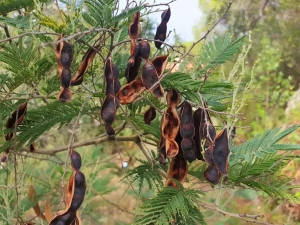
(Photo|| Black Wattle Tree ‘Muthanduku’)
By 1917, just after the death of Paramount Chief Karuri wa Gakure, the British colonial government seized the moment. Wattle, destined for the tanning industry, became the cash crop of the day. But not everyone benefited. The seeds of fortune were handed to the powerful, the loyalists the elite who danced to the drumbeat of colonial rule.
And the rest? They sowed blindly, broadcasting seeds without guidance. As the hills bore green, the soils began to die. Erosion carved scars across the land. The government responded not with education, but with orders. Terracing was no longer a choice; it was a decree. Lands had to be benched. The slopes had to bow to the will of the Empire.
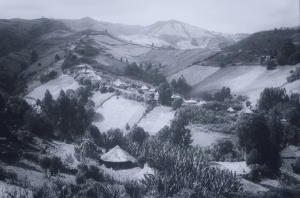
The Native Administration Councils were given a mission: convince or coerce the locals. Bylaws were drafted, punishments set. No terracing, no wattle license. one couldn’t brew muratina or buy sugar.
And so, by the fall of 1945, over 3,000 miles of Murang’a land had been benched. But at what cost?
In 1946, the tide began to turn. The fires of resistance were lit by African soldiers returning from the Second World War, men who had faced real war and would not bow to forced labour. Their defiance fed the resurgence of KAU, which now roared against coercion in Murang’a.
On 20th July 1947, a small victory: women were exempted from terracing. In rebellious pockets like Chief Murai’s Location 8, paid labour replaced forced toil.
On 22nd July, Inyathio cracked the whip. Markets were emptied of idle men. Night dances were banned. Land had to be benched immediately.
On 21st August at Kahuro the locals gathered protesting demanding Murai’s removal from office, police were sent and there were more chaos, hundreds of locals were arrested. Resistance had found its voice.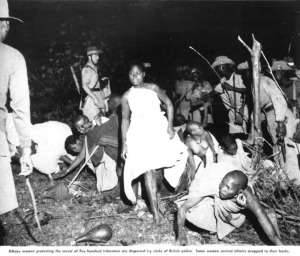
It did not stop. On 23rd September, a peace meeting by the local administration turned chaotic. The young men of Kiama Kia 40 grabbed Chief Inyathio and flogged him before he was whisked away. Days later, the young men stormed his home. Four were gunned down by home guards. Retribution was swift. The British sent an English inspector and established Kahuro Police Station with 44 officers to restore colonial order.
But something had shifted.
Terracing slowed. People resisted. When it resumed, it was voluntary, paid, and this time on their terms. Until the state of emergency would eventually cast a darker shadow, Murang’a stood tall.
Today, as you walk the ridges of Murang’a to the East, West, North-East,your eyes trace the ancient scars of this battle. The terraces remain. Locals call them Benji. They are not just benches. They are silent monuments to a time when the land was both a battlefield and a badge of pride.


Thank you for gathering and documenting the untold part of struggle for independence in Kenya.
Can you find any account how “mùkaro wa Nyandarùa” was dug,by who and how?