


Among the generation of Kikuyu musicians who emerged from Nairobi’s Eastlands during the 1970s, few names became as closely associated with Huruma and the wider Mathare Valley as Wilson Kuria Mukaramani.
His music drew heavily from the people and places that surrounded him, documenting the realities of urban life while retaining the storytelling traditions of his Murang’a upbringing.
Behind the stage name lay a journey that stretched from the hills of Githiga during the Mau Mau era to the studios, bandstands and recording labels that shaped Kikuyu popular music in the decades that followed.
Wilson Kuria was born on 12th July 1949 in Githiga Location 9, Kangema, then part of Fort Hall District, to Kamau and Wambui.
His childhood unfolded against the backdrop of the Mau Mau uprising. Both of his parents joined the liberation struggle and were eventually arrested by the colonial administration. His mother was imprisoned at Kamiti while his father was detained at Manyani, leaving Wilson to be raised by his grandmother during some of the most turbulent years of Kenya’s journey to independence.
Among those who frequently visited the homestead was his uncle, popularly known as Kaka Wa Loise, a guitarist who performed Kikuyu folk songs and occasionally composed his own material. Though he never recorded any of his songs, he introduced Wilson to the guitar, taught him how to play and eventually entrusted him with his own instrument.
Wilson devoted himself to mastering the guitar. Much of his time was spent on a hill overlooking Githiga where he would sit for hours practicing.
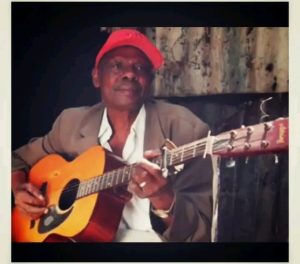
Villagers became accustomed to seeing him there and began referring to him as Mukarima-ini, loosely translated as “the one from the hill.” With time, the nickname evolved into Mukaramani, the name by which he would later become known throughout Kikuyuland.
Without his parents present, formal education remained beyond reach. To support himself and his grandmother, he worked as a herdsman in Mununga village and later on settler farms in the Maragua ridges. Through those years, the guitar remained his constant companion.
Like many young men from Central Kenya during the post-independence period, Mukaramani eventually left home in search of opportunity.
He settled in Thika Town where he earned a living selling charcoal before securing employment as a cook in a factory mess.
From Thika he moved to Nairobi and worked briefly as a caretaker in Ziwani before relocating to a squatter settlement within Karura Forest.
Mukaramani spent approximately seven years in Karura. The settlement was home to hundreds of families who had migrated to Nairobi in search of work and shelter.
Survival depended largely on informal economic activities. Along the banks of River Ruaka, residents brewed traditional drinks such as kangara and mongare which were sold in different parts of the city, including Majengo and neighboring settlements.
As the settlement expanded, concerns grew among city authorities over unregulated alcohol brewing, rising petty crime and recurring public health challenges associated with overcrowded living conditions.
By the early 1970s, Nairobi City Council had resolved to clear the settlement and relocate its residents.
In 1974, the Karura settlement was dismantled during a night operation overseen by Nairobi City Council under Mayor Charles Rubia. The displaced families were relocated to Mji wa Huruma, then a newly planned settlement within the larger Mathare Valley.
Unlike many informal settlements of the era, Mji wa Huruma had been surveyed and subdivided before occupation.
Families were allocated plots on which to construct homes, while sanitation facilities had already been put in place.
Every family received a designated piece of land and every plot had access to a modern toilet, a significant improvement from conditions in Karura.
For many former squatters, the relocation offered an opportunity to establish more permanent roots within Nairobi.
Mukaramani was among those relocated to Huruma. The neighborhood would become inseparable from his identity and later provide inspiration for some of his most enduring songs.
Living among the residents of Huruma and the wider Mathare Valley exposed him to stories, personalities, celebrations and struggles that would repeatedly find their way into his music.
One of the songs most closely associated with him, Uthoni Wa Mathare, drew its inspiration directly from the community in which he lived.
The same year he settled in Huruma, Mukaramani entered a recording studio for the first time.
On 11th July 1974, a day before Kenya’s General Election, he recorded Humbira Ndaa under Andrew Crawford Productions.
The recording failed to achieve commercial success and did little to change his circumstances.
In 1976, while performing at Kia Maiko Nyama Choma Joint in Nairobi, he caught the attention of businessman Ernest Kariuki.
Impressed by the guitarist’s talent and stage presence, Kariuki became convinced that he deserved an opportunity in the recording industry and repeatedly urged Joseph Kamaru to listen to him.
Kamaru eventually agreed, but after assessing the aspiring musician maintained that Mukaramani was not yet ready to become a recording artist.
Rather than abandon the idea, Ernest Kariuki opened his home in Bahati Estate to him, providing a private environment where he could rehearse, compose and develop his craft away from the distractions of public performance.
During this period of intensive rehearsal, Mukaramani occasionally visited Kamaru’s practice studio.
It was there that he came into contact with the prolific producer Nderitu Wa Munene.
After hearing him sing, Nderitu immediately took an interest in the relatively unknown guitarist and offered him an opportunity to record.
The opportunities presented by Kamaru and Nderitu Wa Munene emerged almost simultaneously.
Kamaru would go on to produce Tuiritu Twa Mathare, while Nderitu Wa Munene produced recordings including Uka Mukaramani and Mzee Moja.
Released within a relatively short period, the songs introduced Mukaramani to audiences across Central Kenya and Nairobi and marked the beginning of his rise within Kikuyu music.
By then, Huruma and Mathare had become home to several musicians whose influence would shape Kikuyu popular music for decades.
Among those with whom Mukaramani interacted were S.K. Kimani, John Muniko, Pius Kihingo, John Ndichu and Moses Wanyoike, who had also relocated to Huruma from Murang’a.
Friendships forged within the neighborhood created a vibrant network of musicians who exchanged ideas, rehearsed together and contributed to the growth of Kikuyu music in Nairobi.
As his popularity grew, Mukaramani shared stages with many of the leading names in Kikuyu music and established his own group, Githiga 9 Brothers, under the Teenage Label.
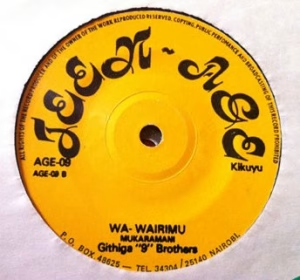
The group later evolved into Mukaramani Brothers, popularly known as Mwenyenyo.
As his ambitions expanded, he established his own recording label, Githiga K Sound.
Through the label he released recordings including Uthoni Wa Mathare and Waganu, followed by Ruoro Rwa Gichuhi.
He later continued working with Nderitu Wa Munene on productions such as Nindainuka and Kairetu Emma.
The success of Githiga K Sound eventually led to the formation of an affiliated female group known as Mathare Sisters, also referred to as Mukaramani Sisters.
Like many musicians of his generation, Mukaramani’s career was affected by changes within the recording industry.
The closure of Kamaru’s music store disrupted a system that had supported numerous artists and producers, while the emergence of music piracy further eroded revenues from recorded music.
Despite these challenges, Mukaramani built a catalogue exceeding one hundred songs.
Titles such as Cucu Witu, Humbira Ndaa, Nyina Wa Boy, Uthoni Wa Mbathi, Uma Narua, Maitu Munjiari, Mzee Moja,Uka Mukaramani, Tuiritu Twa Mathare, Kairíítu Ka Maragua, Tumirembo, Uka Mukaramani, Ndaciariirwo Githiga, Kairetu Emma, P3 Ya Wendo and its sequel, together with Ruoro Rwa Gichuhi,Muito Wa Kayahwe and Mama Gakenia remain part of the rich tapestry of Kikuyu popular music.


